
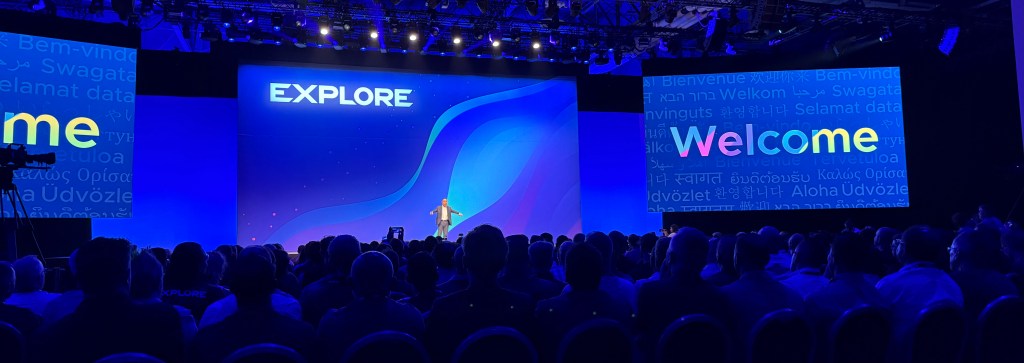
I’m writing this live from VMware Explore in Las Vegas, where this morning’s keynote was led by Hock Tan alongside Paul Turner, Sabina Anja, Chris Wolf, and several VMware customers.
Hock outlined his vision for VMware Cloud Foundation 9 (VCF 9): taking the core building blocks—vSphere, NSX, vSAN, and Aria—and unifying them into a single platform to deliver a true private cloud experience, on-premises. From what I’ve seen, VCF 9 has achieved that, and it’s clear VMware is committed to closing remaining gaps as the platform continues to evolve.
- Key Announcements
- A Private Cloud for All Workloads – Not Just AI
- vExperts’ Favorite New Features in VCF 9
- Developer-Ready Infrastructure: “Infrastructure at the Speed of Developers”
- AI Innovation with Chris Wolf
- New VCP Certifications for VCF 9
- Final Thoughts
Key Announcements
- VMware Private AI foundation is now included in VCF, at no extra cost!
Helping organisations adopt AI, in a secure, on-premises environment. - Canonical Ubuntu Partnership
Support for Chiselled containers—minimal, hardened container images optimised for security. AI-optimised Ubuntu images with GPU support are also coming. - Expanded NVIDIA Support
Including support for Blackwell GPUs, ConnectX-7 NICs, and integration with NVIDIA’s AI stack. - AMD Partnership
Support for AMD Instinct MI350 GPUs and integration with AMD’s Enterprise AI Software, giving customers more choice for GPU acceleration.
A Private Cloud for All Workloads – Not Just AI
While AI remains front and centre in VMware’s innovation story, non-AI workloads have not been left behind. Key enhancements have been focused on resolving enterprise friction points:
- Friction Point #1 – Developers vs IT Controls
- Friction Point #2 – Speed vs Security
- Friction Point #3 – Legacy IT vs Platform for What’s Next
These focuses have culminate in a private cloud that is truly user-centric, offering self-service and empowering developers—providing “IT that moves at the speed of developers” enabling “accelerated path to production”.
I’m particularly excited that VCF 9 natively supports VMs, containers, and AI workloads as first-class citizens, all managed through a consistent control plane. This is a huge win for both users and platform operators.
vExperts’ Favorite New Features in VCF 9
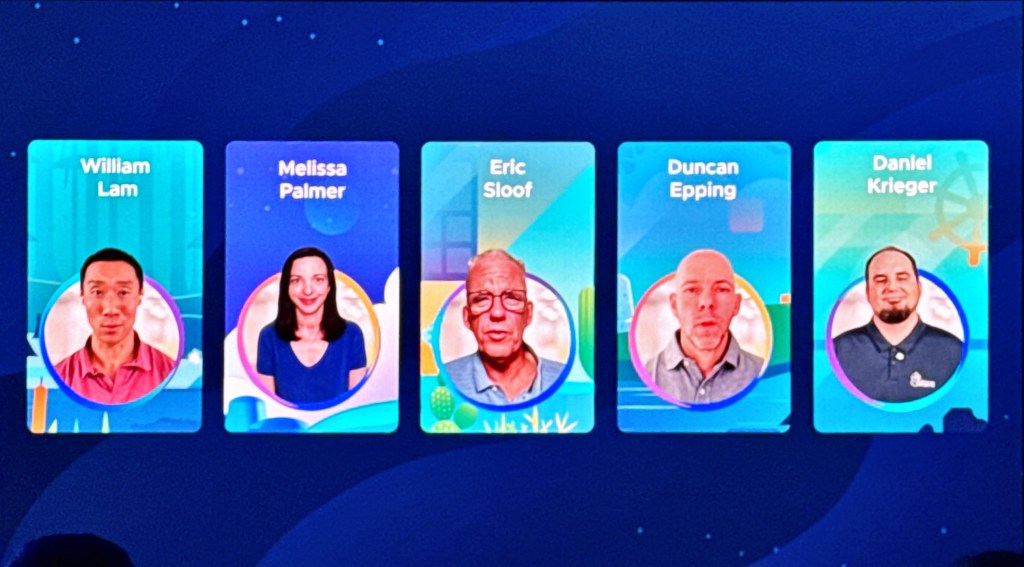
A few of the vExperts at Explore shared their standout features in this release:
- Live Patching in VCF Operations (William Lam)
Schedule and apply patches without downtime—download, plan, and patch, all while staying online. - SecOps Dashboard (Melissa Palmer)
Improved visibility and insights into your organisation’s security posture. - Health & Diagnostics in VCF Operations (Eric Sloff)
Proactively identify issues like expiring certificates, capacity bottlenecks, and system anomalies before they impact performance. - vSAN Global Deduplication (Duncan Epping)
Post-process deduplication that delivers space efficiency without impacting performance. - Virtual Private Clouds (VPCs) (Daniel Krieger)
Spoke about creating a VPC in under 30 seconds—with no networking expertise required.
Developer-Ready Infrastructure: “Infrastructure at the Speed of Developers”
One of the standout moments from the keynote came during the developer-focused segment, where VMware demonstrated how platform teams can deliver infrastructure in a way that’s both secure and developer-friendly.
Developer Experience Walk Though
Sabina Ania took to the stage to walk through a complete developer experience – from code commit to deployment – all running on VMware Cloud Foundation with GitOps automation and built-in security controls.
- A new application namespace was created as the starting point, designed to deploy apps across different zones (fault domains), ensuring resilience and fault isolation.
- Security policies were applied using vDefend YAML configurations, embedding compliance into the deployment process from the start.
- A database was provisioned automatically using Data Services Manager, showing tight integration with stateful services.
- The application was rolled out across distinct environments: Dev, Performance, and Prod clusters.
- GitOps via ArgoCD drove the entire pipeline – showcasing what Sabina called “from commit to a secure running application.”
- VCF Automation provided real-time visibility into the application’s deployment and posture – closing the loop between infrastructure and workload.
- Sabina emphasised developer autonomy, where teams define infrastructure in code, push changes to Git, and let the platform do the heavy lifting.
The entire demo reinforced VMware’s vision for a secure developer-ready platforms that accelerate delivery without compromising control.
Up coming features
Paul Turner highlighted upcoming Developer-Ready Services designed to give developers autonomy while maintaining IT governance:
Built-in Data Services:
- vSAN Native S3 Object Storage
- Postgres & MySQL as-a-Service, powered by VMware Data Services Manager
Integrated App Delivery:
- GitOps with ArgoCD in VCF
- Istio Service Mesh, enabling services as a function
Guardrails by Default:
- Policy-as-Code for VPC security (stored in Git, deployed via CI/CD)
- Hardened Containers to reduce the attack surface
AI Innovation with Chris Wolf
VCF Intelligent Assistant
Chris Wolf took the stage to showcase how AI is being embedded directly into VMware platforms.
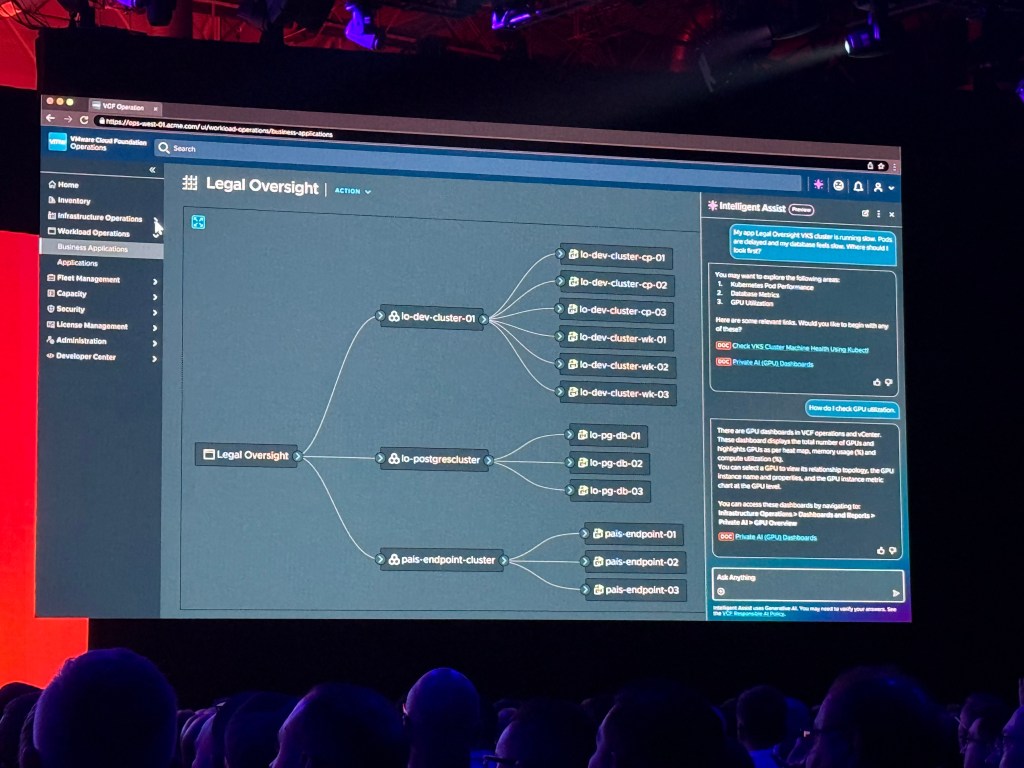
He demoed a chatbot assistant for troubleshooting the VCF environment via natural language. For example:
- Stated an app was running slowly → Assistant provided investigation guidance.
- Asked for GPU utilisation → Displayed VCF Operations Dashboard with relevant metrics.
- Instructed it to vMotion the VM → Completed live in demo.
This is a great example of VMware using AI not just to support AI workloads, but to make the platform itself smarter and easier to operate.
VMware Private AI Foundation
Chris Wolf then continued to deliver further updates on VCF’s AI Offerings, including updates on partnerships and VMware Private AI Foundation’s evolution.
VMware Private AI Foundation, originally launched three years ago, Private AI Foundation has now matured into a powerful platform that simplifies AI adoption across enterprises.
What is Private AI?
At its core, Private AI refers to building and deploying AI models on-premises, within the customer’s private cloud. This gives organisations full control over sensitive data and models, avoiding the risks of public cloud exposure.
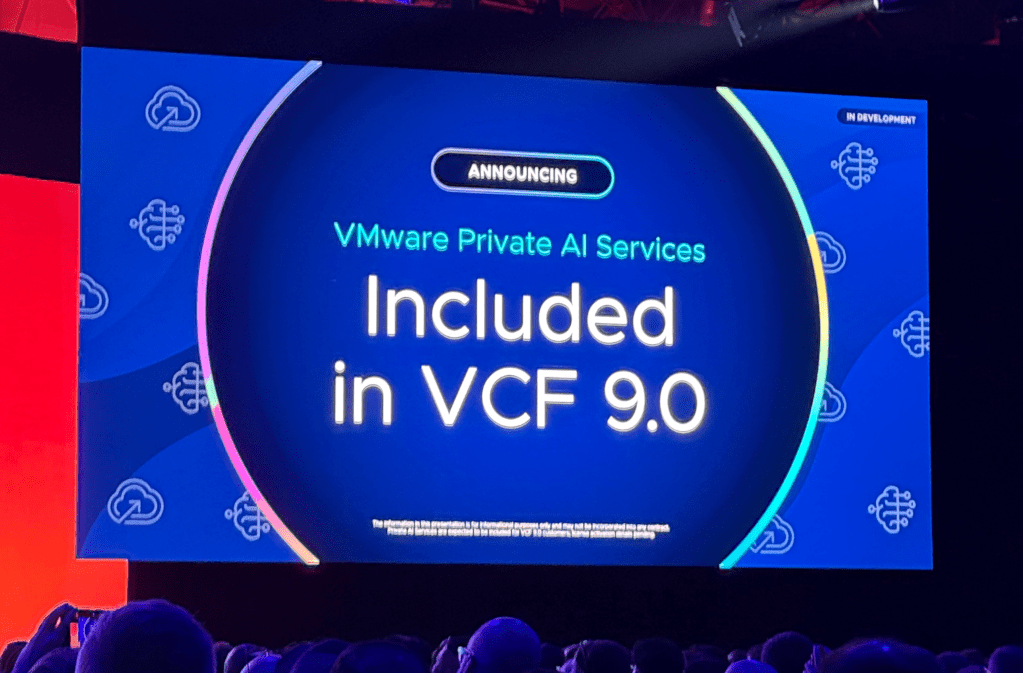
Private AI Foundation is Now Included in VCF!
Possibly the biggest announcement of the day:
VMware Private AI Foundation is now bundled with VCF—at no extra cost.
New Capabilities in VMware Private AI Foundation:
- Model Gallery: Upload and share models internally using org-wide RBAC controls.
- Model Runtime Service: Choose a model, configure runtime flags, and deploy via AI API Gateway—centralising model execution.
- Data Indexing & Retrieval (RAG): Native connectors for SharePoint, Confluence, and more; content is vectorised and made searchable by internal AI apps.
- Agent Builder: Easily combine the Model Runtime and Data Indexing services to build custom RAG endpoints.
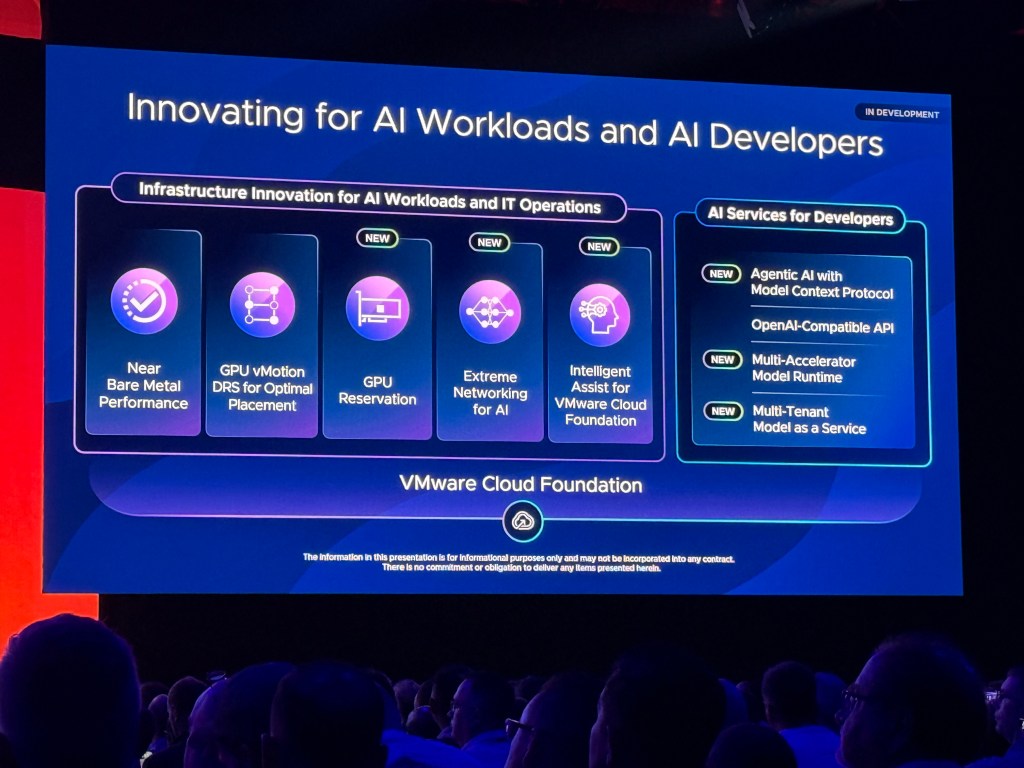
Innovating for AI Workloads and AI Developers
The following new features were announced
Infrastructure Enhancements
- GPU Reservations
- Extreme Networking for AI
- VCF Intelligent Assistant
AI Services for Developers
- Agentic AI with Model Context Protocol
- Multi-Accelerator Model Runtime
- Multi-Tenant Model-as-a-Service
GPU Vendor Partnerships
NVIDIA Partnership
I was very excided to for this announcement – being able to use the RTX Pro 6000 GPUs lowers the bar to entry for many as they offer 96GB of memory at a very competitive price point.
- Blackwell B200 and RTX Pro 6000 GPU support
- ConnectX-7 NICs, BlueField-3, and DirectPath I/O
- Support for HGX Reference Architecture

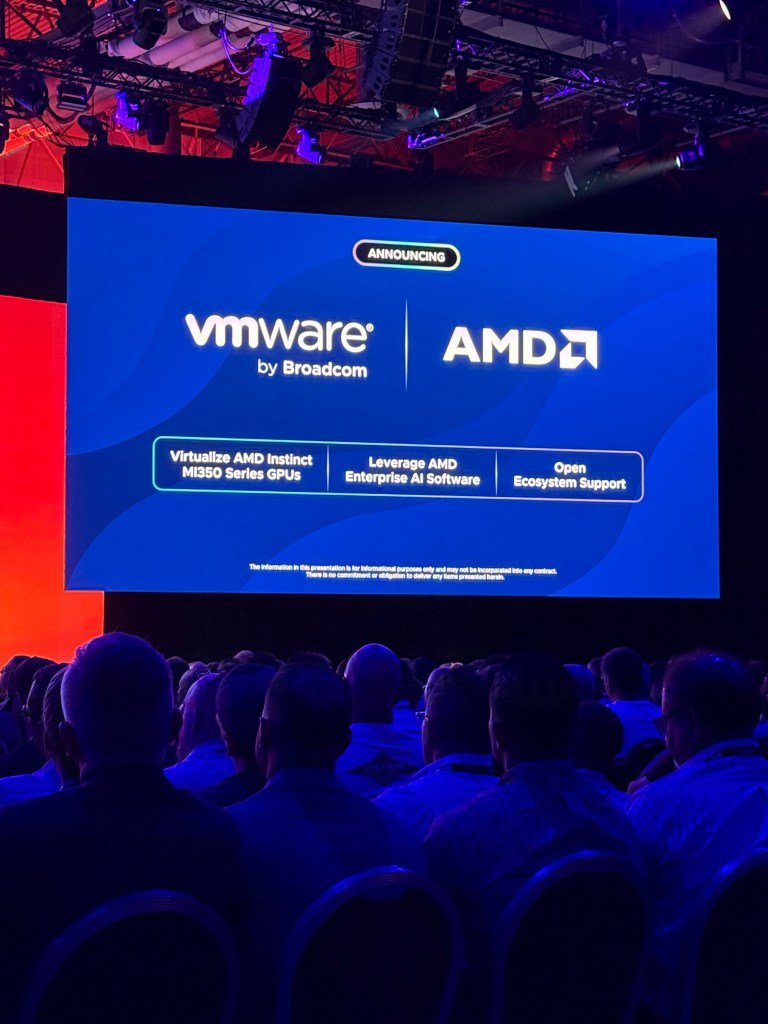
AMD Partnership
It’s great to see this AMD–VMware partnership evolving, giving customers greater hardware flexibility. (Although, to be fair, how this ties into VMware Private AI Foundation wasn’t entirely clear from the keynote.)
- Support for Virtualised AMD Instinct MI350 GPUs
- Integration with AMD Enterprise AI Software
- Ongoing commitment to an open AI ecosystem
New VCP Certifications for VCF 9
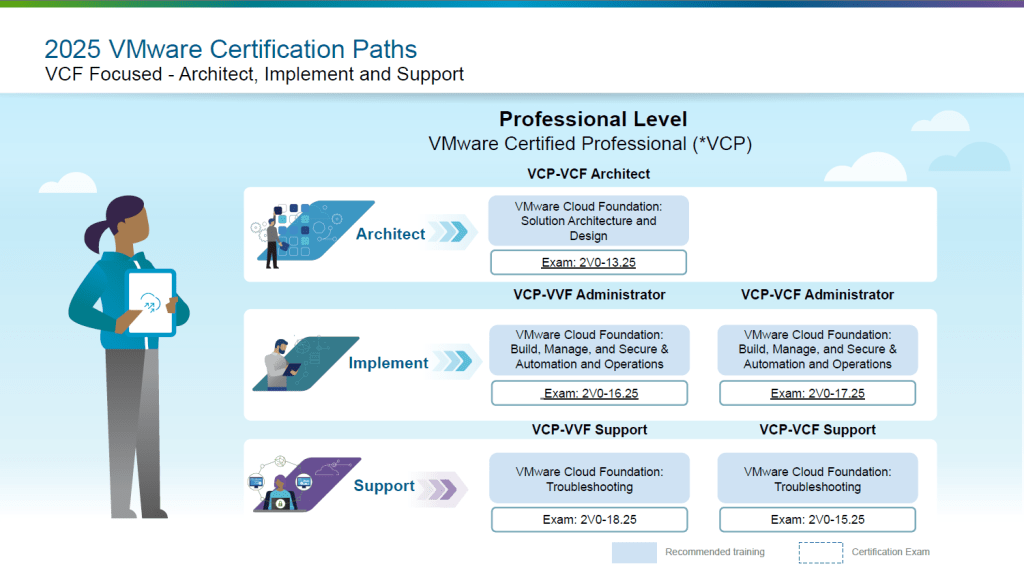
If you missed the news from a few weeks ago, five new VMware Certified Professional certifications are now available:
- VCP – VMware vSphere Foundation Support (2V0-18.25)
- VCP – VMware Cloud Foundation Architect (2V0-13.25)
- VCP – VMware vSphere Foundation Administrator (2V0-16.25)
- VCP – VMware Cloud Foundation Administrator (2V0-17.25)
- VCP – VMware Cloud Foundation Support (2V0-15.25)
Final Thoughts
This year’s keynote was packed with announcements, visionary roadmaps, and tangible innovations. It’s clear VMware is laser-focused on:
- Making private cloud truly developer-friendly
- Simplifying AI adoption
- Providing choice and flexibility across infrastructure
VCF 9 looks to be a powerful release, and with Private AI Foundation now included, it’s clear VMware is making bold moves to lead in the enterprise AI space.
Disclaimer: The keynote included forward-looking statements. Some features and timelines discussed may not reflect the final product.










 VxWorld
Leave a comment